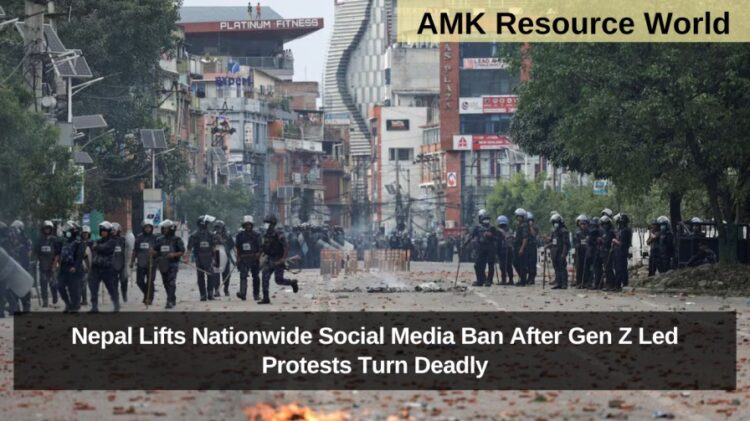
The government of Nepal has officially lifted its nationwide social media ban following days of violent Gen Z-led protests that rocked major cities, including Kathmandu. The ban, which had blocked popular platforms such as Facebook, X (formerly Twitter), and YouTube, was reversed after an emergency cabinet meeting on the backdrop of widespread unrest that left 19 people dead and hundreds injured.
Social Media Ban Sparks Nationwide Protests
The government initially imposed the ban on social media platforms due to their non-compliance with local regulations, citing concerns over misinformation and lack of cooperation with Nepali authorities. However, the move backfired, as it was widely seen as an attempt to suppress freedom of expression.
Thousands of young protestors, predominantly from Generation Z, took to the streets of Kathmandu, Pokhara, Biratnagar, and other major cities. Demonstrations quickly escalated, turning into violent clashes between protestors and security forces. With mounting casualties and international attention, the government faced enormous pressure to roll back the ban.
Cabinet Emergency Meeting and Reversal
In an emergency cabinet meeting, Minister for Communication and Information Technology, Prithvi Subba Gurung, announced that the government had decided to lift the social media ban. He stated that while regulatory concerns remain, dialogue and cooperation with tech companies will be prioritized over outright restrictions.
“Access to communication platforms is essential for citizens in a democracy. We urge protestors to stand down as the government restores normalcy,” Gurung said while addressing the press.

Following the announcement, agencies were instructed to immediately restore access to all major social media platforms across the country.
Gen Z at the Forefront of Digital Freedom
The protests highlighted the power of Nepal’s youth, particularly Gen Z, who view social media not only as a communication tool but also as a vital platform for activism, employment, and self-expression. Many protestors carried placards demanding digital freedom, criticizing the government for adopting what they described as “authoritarian measures.”
Experts believe the protests mark a turning point in Nepal’s democratic journey, where digital rights and internet freedom are now central to political discourse.
Return to Normalcy and Next Steps
With the restoration of social media access, life in Nepal is gradually returning to normal. Shops and schools that had shut down during the protests have reopened, and internet service providers have confirmed that platforms like Facebook, X, and YouTube are once again accessible.
The government has assured the public that it will engage with global tech giants to create a framework for regulatory compliance without undermining freedom of speech. Civil rights groups and youth leaders have welcomed the decision but stressed that accountability is needed for the loss of 19 lives during the unrest.
The lifting of Nepal’s social media ban underscores the growing influence of youth-led movements in shaping national policies. As the government seeks to balance regulation with digital freedom, the events serve as a reminder of the importance of open communication and democratic dialogue in the digital age.