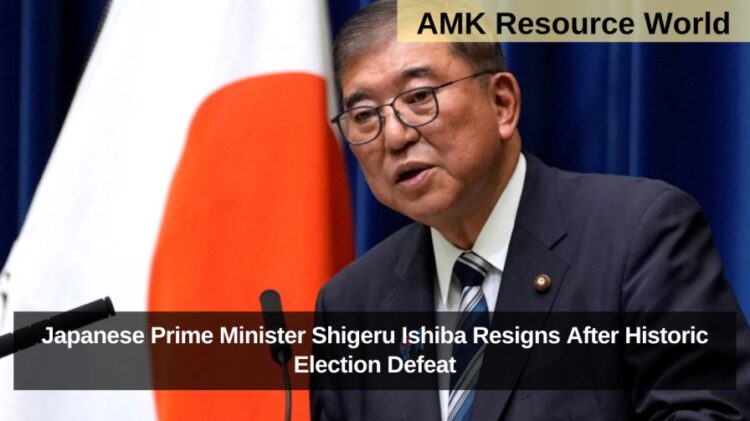
In a major political development, Japanese Prime Minister Shigeru Ishiba resigned on September 7, 2025, following his party’s historic electoral defeat in July. Ishiba, who had been in office since 2023, stepped down after the Liberal Democratic Party (LDP) lost its parliamentary majority for the first time in decades, marking a turning point in Japan’s political landscape.
Ishiba’s Tenure and Achievements
Despite the loss, Ishiba’s tenure was not without significant accomplishments. His government successfully negotiated the Japan-US trade agreement, a landmark deal that strengthened economic ties with Washington and ensured market access for Japanese industries. However, his inability to navigate domestic discontent, rising economic concerns, and voter frustration ultimately led to the LDP’s sharp decline in the polls.
Ishiba’s resignation comes at a sensitive time, as Japan grapples with slowing growth, demographic challenges, and increasing security threats in the Indo-Pacific region. His departure has opened the door to a leadership contest within the LDP, intensifying speculation over who will lead Japan into the crucial 2026 general elections.
The Road Ahead for the LDP
The LDP leadership race is now underway, with several senior figures expected to contest for the position. Restoring public trust will be the foremost challenge for Ishiba’s successor, as voters have expressed growing dissatisfaction with long-standing one-party dominance.

The new prime minister will also have to manage the economic fallout from rising inflation, global trade instability, and Japan’s ongoing fiscal pressures. Policy direction on taxation, labor reforms, and technology-driven growth will be critical for stabilizing the economy and rebuilding voter confidence.
Rising Regional Tensions
Beyond domestic issues, the next Japanese leader will face heightened regional security tensions. Relations with China remain strained over maritime disputes, while North Korea’s missile launches continue to threaten regional stability. Strengthening defense capabilities, reinforcing alliances, and balancing diplomacy with deterrence will be top priorities.
Japan’s partnership with the United States will continue to play a central role in ensuring regional security, but the leadership transition may also bring shifts in foreign policy emphasis. With the 2026 elections approaching, the LDP must strike a careful balance between safeguarding national interests and appealing to an electorate increasingly concerned about peace, stability, and economic prosperity.
Political Uncertainty and Public Sentiment
Shigeru Ishiba’s resignation has injected political uncertainty into Japan’s governance at a critical juncture. For many citizens, the LDP’s electoral defeat represented a demand for change and accountability. Whether the party can regain its footing will depend on its ability to select a leader capable of uniting factions, restoring credibility, and addressing the pressing concerns of everyday Japanese citizens.
Shigeru Ishiba’s departure marks the end of a turbulent chapter in Japanese politics. His successor will inherit a challenging landscape, where restoring public trust, stabilizing the economy, and managing regional security threats will be decisive for Japan’s future. As the nation looks toward 2026, the leadership contest within the LDP will determine not only the party’s survival but also the direction of Japanese politics in the years ahead.