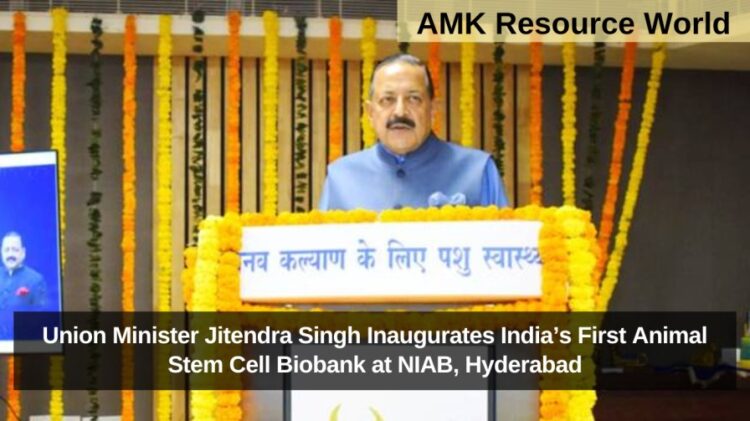
In a landmark event for animal biotechnology and research, Union Minister of State for Science & Technology, Dr. Jitendra Singh, inaugurated India’s first Animal Stem Cell Biobank at the National Institute of Animal Biotechnology (NIAB), located under the Biotechnology Research Infrastructure Consortium (BRIC) in Hyderabad.
The newly established biobank is a state-of-the-art facility designed to collect, store, and preserve high-quality stem cells derived from various animal species. This cutting-edge centre is set to play a crucial role in advancing scientific research focused on animal health, genetic preservation, and biodiversity conservation.
A Milestone in Animal Biotechnology
The Animal Stem Cell Biobank represents a significant step forward in India’s efforts to harness biotechnology for sustainable development in animal sciences. By preserving stem cells from a wide range of animals, including indigenous and endangered species, the biobank will enable researchers to undertake advanced studies in disease resistance, reproduction, and genetic improvement.
Such preservation is vital not only for enhancing livestock productivity but also for protecting India’s rich animal biodiversity from the threats of extinction and genetic erosion. The facility’s ability to store stem cells indefinitely ensures that genetic material remains available for future therapeutic and breeding interventions.
Breakthrough Technologies Launched by NIAB
During the inauguration event, Dr. Jitendra Singh also launched five breakthrough animal health technologies developed by NIAB. Among these innovations is BruDIVA, a novel diagnostic test designed to differentiate between animals infected with brucellosis and those vaccinated against the disease.

Brucellosis is a bacterial infection that poses a significant threat to livestock health and productivity worldwide. Traditional diagnostic methods often fail to distinguish infected animals from vaccinated ones, complicating disease control measures. BruDIVA addresses this challenge by providing a reliable and rapid tool for veterinarians and farmers, enabling more effective monitoring and management of brucellosis outbreaks.
The other four technologies unveiled focus on improving animal disease diagnostics, vaccine development, and health management, reinforcing NIAB’s position as a pioneer in animal biotechnology research in India.
Implications for Animal Health and Biodiversity Conservation
The establishment of the Animal Stem Cell Biobank, combined with the introduction of advanced diagnostic tools like BruDIVA, marks a transformative moment for India’s animal health sector. These initiatives will help reduce economic losses caused by diseases, improve livestock productivity, and promote sustainable farming practices.
Furthermore, by safeguarding the genetic material of indigenous breeds, the biobank supports national and global efforts to conserve biodiversity, maintain ecological balance, and ensure food security through resilient animal populations.
Government’s Vision and Support
Dr. Jitendra Singh highlighted the government’s commitment to fostering innovation in animal sciences as part of its broader agenda to strengthen agricultural biotechnology and veterinary research. He emphasized that modern technologies like stem cell biobanking and molecular diagnostics are essential tools in achieving self-reliance and scientific excellence in India’s livestock sector.
With the Animal Stem Cell Biobank operational, NIAB is poised to become a hub for cutting-edge research and collaboration, attracting scientists and stakeholders from across the country and abroad. The facility is expected to facilitate breakthroughs in regenerative medicine, disease control, and animal breeding, ultimately contributing to the welfare of farmers and the nation’s food security.