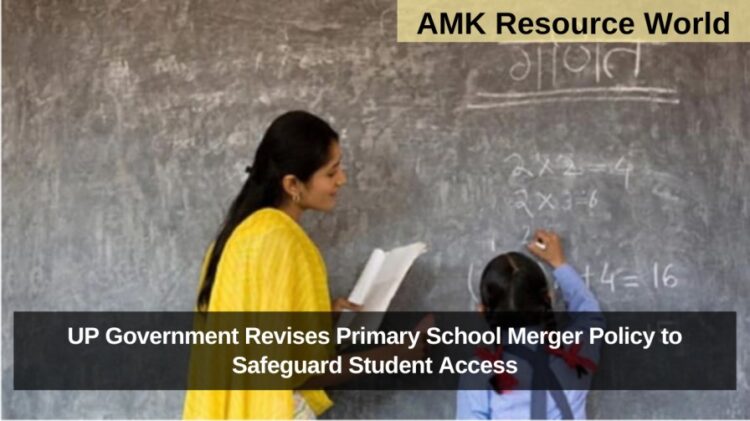
In a significant move addressing growing concerns from rural communities, the Uttar Pradesh government has revised its primary school merger policy to ensure better accessibility and safety for students. The decision follows widespread criticism from parents, teachers, and local panchayats, particularly in villages where children were forced to travel long and sometimes unsafe distances to reach school after smaller institutions were merged or closed.
Under the new directives issued by the Basic Education Department, no government primary school located more than one kilometre from another will be merged. Additionally, schools with over 50 enrolled students will remain operational, regardless of proximity to other institutions.
Basic Education Minister Sandeep Singh confirmed the shift, stating, “We are keeping in mind the convenience, safety, and learning of the children.” He emphasized that the state remains committed to improving education but not at the cost of children’s well-being or access.
The original merger policy aimed to streamline educational infrastructure in areas with low enrollment, but it quickly drew backlash. Teachers’ unions warned that such a strategy could increase dropout rates, especially among children in remote or poorly connected areas. In response, the government has now introduced several exceptions.

Notably, schools located within one kilometre of each other but separated by physical barriers such as highways, rivers, or railway lines will not be merged. This ensures that children won’t be required to cross dangerous routes to attend school.
Furthermore, rather than allowing merged school buildings to sit vacant, the government plans to repurpose these spaces for Anganwadi centres or Balvatika units, providing early childhood education facilities and ensuring the infrastructure continues to serve the community.
The revised policy has been welcomed by educators and parents alike. Many believe it strikes a much-needed balance between efficient resource management and the fundamental right to accessible education. “This is a corrective step,” said a spokesperson from a leading teachers’ association. “It shows the government is listening to the voices from the ground.”
In rural and underserved areas, even a small increase in travel distance can deter children, particularly girls, from attending school. By ensuring schools remain close to home and accessible, the UP government hopes to keep more children enrolled, safe, and engaged in their learning journey