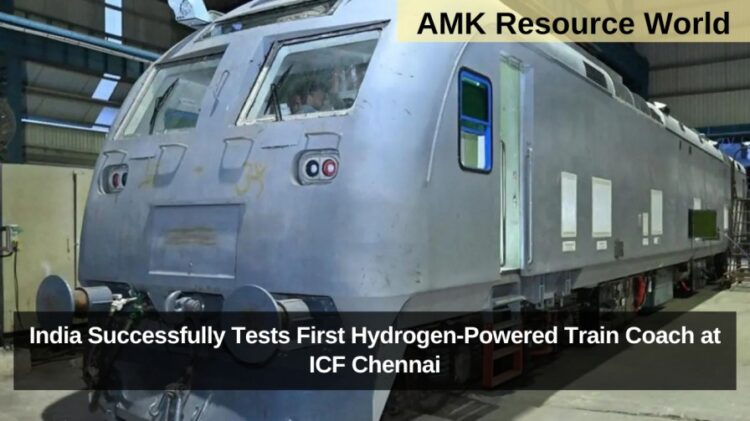
India has taken a significant step toward green transportation with the successful trial of its first hydrogen-powered train coach at the Integral Coach Factory (ICF), Chennai. This marks India’s entry into the exclusive club of nations like Germany, China, and Japan that have adopted hydrogen rail technology, further cementing the country’s commitment to sustainable and energy-efficient transportation.
The hydrogen train trial is part of the Indian Railways’ ambitious “Hydrogen for Heritage” initiative, which envisions operating 35 hydrogen-powered trains across the nation. Each hydrogen train is expected to cost around ₹80 crore, with an additional ₹70 crore allocated for essential infrastructure such as hydrogen refuelling stations, storage, and support systems. This large-scale investment is aimed at modernizing railways while drastically reducing carbon emissions and dependence on fossil fuels.
The Indian Railways is also undertaking a pilot project on the Jind–Sonipat section in Haryana to assess the feasibility and performance of hydrogen-powered trains under real-world conditions. This trial will provide key insights into route planning, safety mechanisms, and long-term cost-effectiveness, setting the stage for a national rollout.

The train being developed boasts a 1,200 HP (horsepower) hydrogen fuel cell propulsion system. This technology converts hydrogen into electricity, producing only water and heat as by-products, making it an environmentally clean alternative to diesel engines. It will replace older, polluting diesel-powered trains, especially on heritage and non-electrified routes, thereby reducing the railway’s carbon footprint significantly.
The hydrogen-powered train not only contributes to India’s decarbonization goals but also promotes indigenous innovation and manufacturing under the “Make in India” initiative. Engineers and technologists at ICF Chennai have played a pivotal role in developing this green technology domestically, potentially opening export opportunities in the future.
This initiative is a cornerstone of India’s broader strategy to achieve net-zero emissions by 2070. As Indian Railways is among the world’s largest rail networks and one of the biggest consumers of diesel, the adoption of hydrogen fuel technology could serve as a transformative leap towards green mobility.
With this breakthrough, India reaffirms its dedication to pioneering sustainable transport solutions and sets a compelling example for other developing nations aiming to transition to clean energy. The successful trial signals not just a technological achievement but a progressive shift toward an environmentally resilient future.