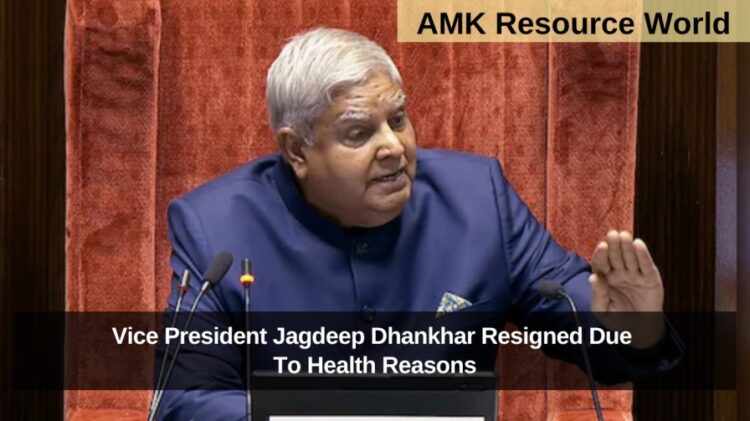
In a significant political development, Vice President Jagdeep Dhankhar tendered his resignation on July 21, 2025, triggering a temporary shift in the leadership of the Rajya Sabha. As per constitutional provisions, Deputy Chairperson Harivansh has assumed the responsibilities of the Rajya Sabha Chairperson under Article 91 of the Indian Constitution, which allows the Deputy Chairperson to act in the absence or resignation of the Vice President.
This resignation initiates a crucial constitutional process. As per Articles 63 to 71 of the Constitution and the Vice-President (Election) Rules, 1974, an election to appoint a new Vice President must be held within 60 days. The electoral college for this election comprises 788 Members of Parliament (MPs)—including both elected and nominated members of the Lok Sabha and Rajya Sabha.
To qualify for the Vice Presidency, a candidate must be an Indian citizen, at least 35 years of age, and eligible for election to the Rajya Sabha. While the office is largely ceremonial, the Vice President plays a pivotal role in ensuring smooth legislative proceedings as the ex-officio Chairperson of the Rajya Sabha, India’s Upper House of Parliament.

Jagdeep Dhankhar’s resignation not only marks the beginning of a key electoral process but also reflects the evolving dynamics between the executive and legislative branches of the Indian government. While the reasons for his resignation have not been officially detailed, political analysts suggest it may be linked to broader shifts in political strategy, internal coalition adjustments, or potential gubernatorial or executive responsibilities in the future.
Deputy Chairperson Harivansh, who now holds the chairmanship temporarily, is expected to maintain procedural continuity in the Rajya Sabha. His tenure in parliamentary leadership has been marked by efforts to uphold decorum and fairness during often-contentious debates.
This transition brings into focus the constitutional mechanisms that safeguard institutional continuity and democratic functioning in India. With the clock ticking on the 60-day timeline, political parties are expected to begin consultations and strategizing for the selection of suitable candidates.
As the nation awaits the nomination and election of the next Vice President, the development underscores the importance of constitutional order and the adaptability of India’s parliamentary framework in times of transition.