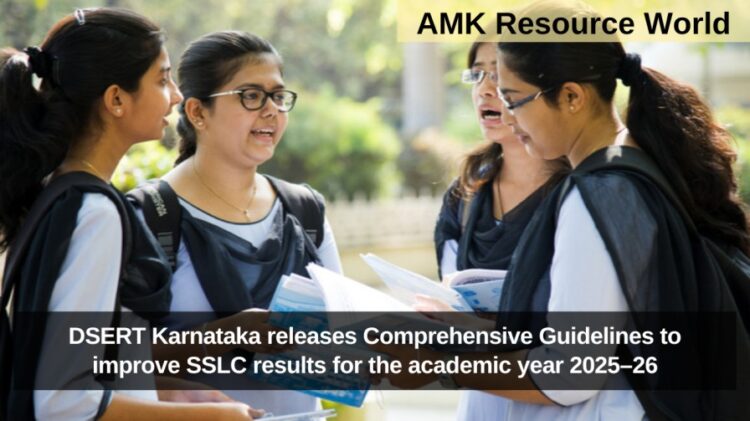
In a strategic move to boost the academic performance of students in the state, the Department of State Educational Research and Training (DSERT), Karnataka, has released a detailed action plan outlining key steps to improve the SSLC (Secondary School Leaving Certificate) results for the academic year 2025–26. These steps are designed to help government and aided schools across the state strengthen learning outcomes, enhance student engagement, and build a robust support system around Class 10 students.
The SSLC examination is a crucial academic milestone that shapes the educational and professional future of students. Understanding the importance of this stage, DSERT has proposed a series of interventions, evaluation mechanisms, capacity-building efforts, and community involvement measures to ensure better performance in the 2025–26 board exams.
Timely Completion of Syllabus by December 2025
One of the cornerstone recommendations from DSERT is to ensure that the entire SSLC syllabus is completed by December 2025. This timeline gives both students and teachers ample time for revision, practice, and remedial learning before the final board exams. Schools are encouraged to strictly follow the academic calendar and monitor weekly and monthly progress through school-level academic reviews. This step ensures that the teaching-learning process remains on track, minimizing the pressure during the last few months of the academic year.

Setubandha Programme and Remedial Teaching
In June 2025, DSERT rolled out the Setubandha programme, a statewide initiative to assess and address learning gaps, especially in foundational literacy and numeracy (FLN). Through FLN assessments and the Success Test conducted in July, students who are behind academically were identified. These students are now provided daily remedial teaching sessions, focusing on core concepts in language, mathematics, and science.
Remedial teaching will continue until December 2025. DIET (District Institute of Education and Training) Nodal Officers are assigned to prepare school-wise timetables and are required to visit schools five days a week to observe regular and remedial classes, offer academic support, and update inspection reports through the SATS Inspection App.
Daily Special Classes and Academic Practice
Starting from July 2025, all schools have been instructed to conduct special classes focused on improving writing, comprehension, and critical thinking skills. A structured plan mandates that:
- One subject-specific class is held each day before school begins.
- After-school sessions are conducted for students to practice model question papers, work on answer-writing skills, and participate in reading-aloud activities.
Students are grouped as Above Average, Average, and Below Average, and assigned to teachers accordingly. This categorization allows for individualized learning strategies and ensures no student is left behind.
Use of Lesson-Wise Assessments and SATS-Based Tracking
After the completion of every lesson, teachers are required to conduct a short written test to assess comprehension. These lesson-wise, student-specific evaluations form the basis for further interventions. The test scores and learning progress data are uploaded to the SATS software, allowing monitoring at multiple levels — student-wise, school-wise, cluster-wise, and district-wise.
This system of real-time data tracking is expected to ensure accountability, help identify slow learners quickly, and support decision-making for targeted academic interventions.
Focus on Health, Lifestyle, and Student Well-being
Recognizing the link between well-being and academic performance, DSERT has encouraged schools to utilize the morning prayer period to promote healthy lifestyles among students. Headmasters and teachers will offer guidance on:
- Limiting screen time and mobile phone use.
- Following a nutritious diet including ragi malt, bananas, eggs, and vegetables.
- Maintaining hygiene and discipline.
These soft interventions aim to create a balanced learning environment, ensuring that students are mentally and physically prepared for academic challenges.
Monthly Parent-Teacher Meetings (PTMs) and September Workshop
To ensure parental involvement in a child’s academic journey, schools are directed to hold monthly PTMs for Class 10. These meetings will be used to:
- Inform parents of the initiatives taken to improve SSLC results.
- Discuss their child’s progress and challenges.
- Offer home-based guidance strategies for academic support.
In September 2025, once the SSLC I and II exam dates are announced, a half-day workshop will be organized for parents to help them understand the exam structure, expectations, and tips for keeping students stress-free and focused.
These meetings will continue monthly until March 2026.
Early Warning System (EWS) and Absenteeism Prevention
DSERT’s Early Warning System plays a vital role in ensuring consistent attendance. The system monitors daily attendance through SATS and flags students who are absent for more than seven consecutive days. In such cases, Headmasters, subject teachers, and women SDMC members are required to conduct home visits to identify reasons for absenteeism and encourage students to return to school.
This proactive measure ensures that potential dropouts are identified early and appropriate interventions are taken to retain them in the education system.

Re-enrolling Out-of-School Students
In coordination with School Development and Monitoring Committees (SDMCs) and local stakeholders, schools are instructed to identify and reach out to out-of-school Class 10 students. Personalized student-wise case studies will be conducted to understand the barriers and bring such students back into the education system. This effort aims to reduce dropout rates and promote inclusive education for all.
Buddy Pairing and Peer Learning
To support slow learners, schools are encouraged to adopt Buddy Pairing systems, where academically strong students are paired with weaker peers to engage in group study, peer tutoring, and collaborative learning. These inclusive learning strategies aim to make students more confident and capable, with the added benefit of building strong friendships and peer bonds.
Cluster Nodal Officers, appointed by DIET principals, will be responsible for monitoring the effectiveness of buddy systems. Each officer will visit a school daily, observe slow learners’ progress, and record data in the SATS Inspection App.
Subject-Wise, Unit-Wise Question Paper Support
To enhance exam readiness, DSERT has released subject-wise and unit-wise question papers for Class 10 students through various DIETs. These papers include:
- Multiple Choice Questions (MCQs)
- Short Answer Questions
- Long Answer Questions
These model papers mirror the SSLC board exam pattern and will help students practice regularly, understand question structures, and improve time management during examinations.
The DSERT’s roadmap for improving SSLC results in 2025–26 is a holistic strategy that addresses not only syllabus completion and academic support but also student well-being, parental engagement, dropout prevention, and institutional accountability.
Through structured implementation, collaborative involvement of teachers and parents, and continuous monitoring, Karnataka is laying a strong foundation to elevate the quality of secondary education, reduce learning gaps, and empower every student to succeed in the SSLC board examinations and beyond, for complete guidelines details CLICK HERE